
The Psychology of Play: How Video Games Boost Cognitive Skills and Mental Agility
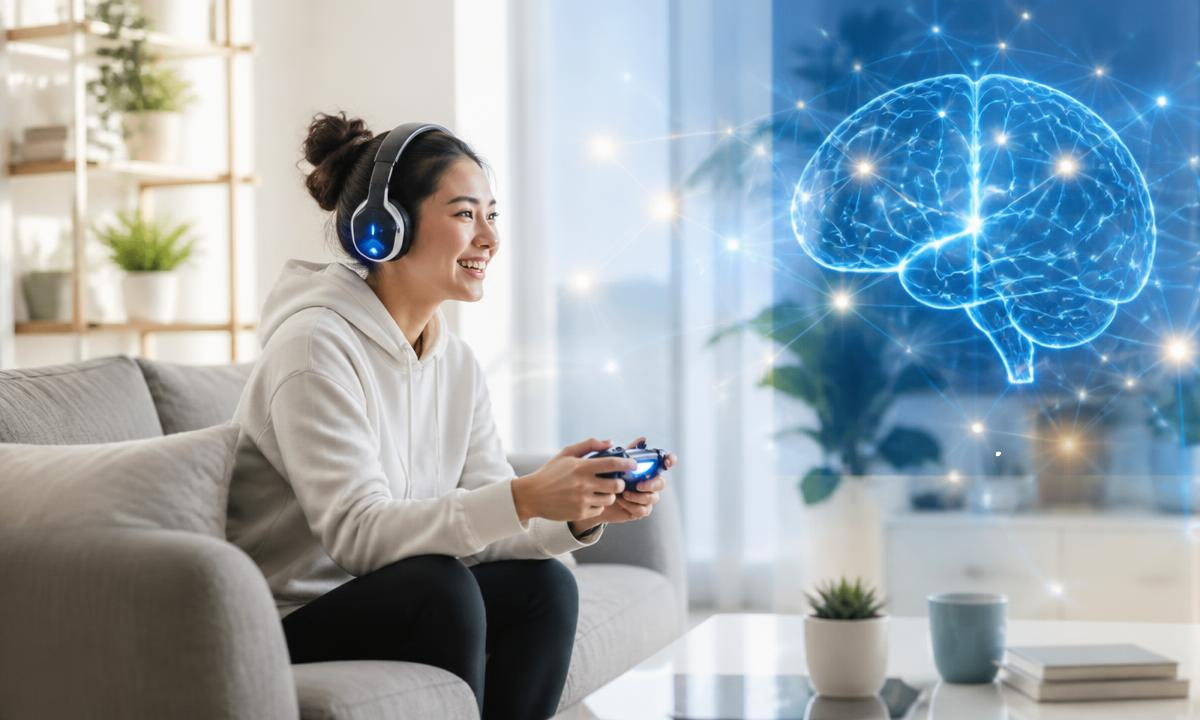
Video games are frequently seen as mere distractions. However, a broader perspective reveals a significant impact on cognitive abilities. Emerging research suggests that specific types of games can enhance attention, accelerate decision-making, and foster flexible thinking. This indicates that the psychology of play extends beyond simple entertainment, delving into how interactive challenges actively shape the brain.
It is important to note that not all games yield identical results, nor is more play always superior. Nevertheless, the cognitive advantages of gaming are evident when observing how players tackle problems. They adapt to new rules and maintain focus under pressure, highlighting the unique mental training occurring during play.
Scientific interest in this field is expanding because games powerfully combine feedback, repetition, reward, and challenge. These elements are crucial for learning and development. If you have ever pondered whether video games make you smarter, the answer suggests they can strengthen particular mental skills. This depends heavily on demanding game design and balanced playing habits.
The design of a game significantly influences these outcomes. Mechanics requiring pattern recognition, precise timing, strategic planning, and quick adaptation can challenge the brain in ways passive media typically cannot. For deeper insights into how interactive systems affect behavior, explore understanding game design principles and their real-world impact.
The Science of Play: More Than Entertainment
The psychology of play illuminates why games are so mentally stimulating. Effective games immerse players in scenarios demanding keen observation, solution testing, and rapid feedback responses. This dynamic cycle maintains an active mind. Unlike passive viewing, gaming requires active participation, prediction, and real-time adjustments from individuals.
Experts often link these advantages to neuroplasticity, which is the brain’s capacity to reshape itself through experience. Research indicates that engaging with video games can be associated with enhancements in attention, spatial abilities, and problem-solving. This depends significantly on the specific game genre and how it is played.
Different game genres cultivate distinct cognitive abilities. Strategy games can strengthen planning and efficient resource management. Puzzle games often refine pattern recognition and working memory. Action games frequently boost visual attention, stimulus response, and overall reaction speed. This diversity explains why generalized claims about gaming can be inaccurate, as outcomes are highly specific to player activity. Studies from leading institutions suggest that playing video games has been associated with improvements in these areas, depending on the genre and context. For further details on this, see research discussed by the American Psychological Association.
This variety also clarifies why educational video games and cognitive development games continuously attract interest from educators and researchers. When challenges align with a player’s skill level, learning becomes an active, unforced experience. Players remain engaged, earning progress through exploration and experimentation rather than solely through rote memorization.
Boosting Attention and Focus: A Gamer’s Edge
A compelling assertion in this field is that video games enhance focus. Rapidly paced games, specifically, require players to monitor dynamic environments, track numerous targets, and effectively filter out distractions. This form of sustained and selective attention can effectively function as a mental exercise, strengthening cognitive control.
Studies indicate that players of action-oriented games often improve their capacity to allocate visual attention and make quicker perceptual judgments. Essentially, they become more adept at rapidly discerning crucial information. This refined skill holds significant value beyond gaming, particularly in demanding environments where attention is frequently fragmented.
Many games also cultivate divided attention, which is the capacity to process multiple information streams simultaneously. A player might simultaneously observe a minimap, manage resources, communicate with teammates, and respond to imminent threats within moments. This illustrates how gaming fosters mental agility, moving beyond passive screen engagement to active, controlled multitasking practice.
While real-life multitasking can be overdone and not every task benefits from division, the ability to flexibly shift focus while maintaining sight of objectives remains valuable. Students, professionals, and creators alike can gain from understanding when to intensely focus and when to broaden their awareness.
Problem-Solving and Strategic Thinking Skills
The connection between gaming and problem-solving is profound, as numerous games are constructed around intricate obstacles. Players are required to decipher patterns, experiment with various options, and refine their strategies when initial attempts falter. This iterative process inherently rewards curiosity and persistence, embracing trial and error rather than penalizing it.
Strategy games particularly excel in fostering these skills. They challenge players to anticipate multiple moves, balance immediate costs against future benefits, and adapt to evolving circumstances. Role-playing games often deepen this by integrating planning with decisions about inventory, character development, and divergent narrative paths. These intricate mechanics can bolster executive functions, including planning, organization, and flexible reasoning.
Puzzle games, while distinct, similarly sharpen critical thinking. They train players to uncover latent rules, decompose complex challenges into manageable segments, and recognize less obvious relationships. This explains why individuals seeking the best video games for cognitive development frequently gravitate towards titles rich in puzzles or strategic elements, preferring them over entirely passive experiences.
Some of these strategic behaviors extend to daily decision-making outside the realm of entertainment. For those interested in how game systems can influence practical thought, play smarter: budgeting and financial skills learned from gaming economics provides another illustration of how play can reinforce mindful planning and resource awareness.
Sharpening Decision-Making and Reaction Time
Action-intensive games are frequently highlighted for their role as reaction time video games, immersing players in continuous time-sensitive scenarios. Threats emerge rapidly, information evolves quickly, and decisions must be made instantaneously. Over extended play, this environment can cultivate faster judgments, often without compromising accuracy.
This aspect makes the relationship between gaming and decision-making particularly fascinating. Proficient players do not merely react with greater speed. They learn to recognize patterns earlier, disregard superfluous signals, and prioritize the most useful information. Frequently, enhanced speed stems from more efficient perception rather than impulsive actions.
Hand-eye coordination is also a crucial component. Whether a player is aiming, evading, constructing, or navigating, there is a constant integration of visual input with motor responses. This repetitive connection between observation and action can bolster precision and timing, supporting overall mental acuity in tasks that demand rapid responses and coordinated movement.
However, it is essential not to equate reaction-based skills with universal intelligence. Excelling quickly in a shooter game will not automatically translate to superior performance in every real-world task. What it can achieve is the reinforcement of specific perceptual and decision-making habits that may prove transferable when encountering similar demands.
Memory and Learning: Building Brainpower Through Gaming
Memory is another significant domain where the brain benefits of video games frequently manifest. Players consistently recall controls, intricate maps, item placements, enemy behaviors, quest objectives, and detailed narrative elements. This continuous retrieval serves as an exercise for working memory, enabling individuals to retain and manipulate information concurrently with other tasks.
Open-world and adventure games are particularly effective in supporting spatial memory. Players construct intricate mental maps of vast environments, learning shortcuts, landmarks, and optimal routes through repeated exploration and interaction. Research indicates that gaming has been linked with observable changes in brain regions vital for spatial navigation and strategic planning. These findings are supported by studies from institutions like the Max Planck Institute for Human Development.
Learning within game environments also contrasts with traditional instruction. Feedback is instantaneous, and the consequences of failure are typically low-stakes. Progress is achieved by iterating with improved information. This dynamic cycle can render educational video games particularly effective, especially when their design prioritizes active participation over rote memorization.
This engagement is crucial for both children and adults, as motivation is an intrinsic component of effective learning. Individuals tend to retain more information when they are invested in the outcome. Games cultivate this investment through structured goals, compelling challenges, and meaningful rewards, illustrating how video games enhance memory and attention in captivating ways.
The Flow State: Deep Immersion in Gaming
Among the most valuable concepts in the psychology of play is the flow state. This term describes a profound condition of deep concentration where individuals become entirely engrossed in their activity. During flow, time perception often distorts, external distractions diminish, and the task feels challenging yet entirely within one’s capabilities.
Games are exceptionally adept at inducing flow due to their inherent balance of challenge and immediate feedback. Should a task be too simple, boredom quickly ensues. Conversely, if it is excessively difficult, frustration takes hold. Expertly designed games maintain players within this optimal zone, where effort feels purposeful and continued progress remains attainable.
This state holds significant importance for learning, as attention is intensely focused during flow experiences. Players iteratively practice skills, fine-tune their timing, and assimilate complex patterns while remaining emotionally engaged. This provides a key reason why video games can boost brain power naturally rather than through forced exertion. The intrinsic desire to improve drives continuous practice.
Furthermore, immersion can contribute to stress relief, particularly when gaming habits are maintained as healthy and intentional. This mindful engagement can offer a beneficial escape, fostering a sense of calm and accomplishment within digital spaces.
Neuroplasticity: The Brain’s Adaptation Through Gaming
The neuroscience underpinning gaming frequently highlights neuroplasticity. This concept refers to the brain’s inherent capacity to form and reinforce neural connections in response to repeated experiences. When an individual regularly practices skills such as attention, navigation, memory recall, or rapid decision-making, the brain structurally adapts to more efficiently support these cognitive demands.
It is important to clarify that not every gaming session triggers dramatic brain alterations. Neuroplasticity is a complex process influenced by factors including consistency of engagement, level of challenge, adequate sleep, stress management, and overall physiological health. Nonetheless, interactive play establishes an optimal setting for repetitive actions coupled with immediate feedback, which sustains research interest in the psychological impact of video games on brain function.
Moreover, there is increasing exploration into the therapeutic applications of gaming. Researchers, including those supported by the National Institutes of Health, have investigated correlations between gaming and improved performance on tasks requiring impulse control and working memory. While this field is still developing, the prevailing trend indicates that games are increasingly being examined as legitimate tools for cognitive enhancement, rather than solely as recreational items.
However, maintaining a realistic perspective is crucial. Not all games present identical cognitive demands, and individual players exhibit varied responses. The most robust conclusions emerge from analyzing specific game mechanics, player habits, and measurable outcomes, rather than making broad assumptions about gaming’s inherent goodness or detriment.
Applying Gaming Skills Beyond the Screen
Transferable Cognitive Benefits for Real Life
The question of whether video games can enhance executive functions in ways relevant outside of play is often met with a resounding yes. Skills such as planning, adaptability, prioritization, and learning from setbacks are invaluable in academic, professional, and daily contexts. While direct transfer is seldom flawless, the congruence can be significant when a game cultivates abilities mirroring real-world demands.
For instance, strategic games can bolster project management thinking by instructing players in effective resource allocation and forward planning. Cooperative games foster improved communication skills, particularly when teams must synchronize actions under time-sensitive pressure. Competitive titles can impart valuable lessons in emotional regulation, requiring players to regroup after errors without losing their strategic focus.
Social interaction within games also holds considerable importance. Multiplayer settings frequently cultivate teamwork, negotiation tactics, and leadership qualities. These advantages become especially pronounced within supportive and inclusive gaming communities, enriching social bonds and collaborative abilities.
Gaming as a Catalyst for Future Pathways
Beyond immediate cognitive benefits, gaming can also ignite future aspirations. Many players discover passions in areas like game design, content broadcasting, software coding, psychology, or competitive esports, directly inspired by their favorite games. This journey illustrates how deeply engaging play experiences can pave the way for diverse career opportunities and personal development.
Responsible Gaming for Optimal Cognitive Benefits
Cultivating Healthy Habits for Enhanced Outcomes
The advantages offered by strategic video games for both adults and younger individuals are undeniable; however, maintaining balance is paramount. Excessive engagement can detrimentally impact sleep patterns, physical activity levels, academic responsibilities, or interpersonal relationships. It is the cultivation of healthy gaming habits that truly allows the positive cognitive aspects to flourish.
A practical strategy involves prioritizing the quality of play over sheer quantity. Consider the cognitive demands a game places on the player. Does it stimulate problem-solving, foster spatial awareness, encourage teamwork, or inspire creative experimentation? Is gaming integrated with regular breaks, physical movement, and sufficient rest? Responsible gaming is not about apprehension, but rather about deliberate and mindful engagement.
To ensure gaming remains both productive and beneficial, consider these straightforward practices:
- Choose games that actively challenge, such as those emphasizing strategy, puzzles, simulations, or collaborative problem-solving.
- Establish clear time boundaries, ensuring that gaming enhances daily life rather than displacing essential activities.
- Prioritize adequate sleep, as both memory consolidation and learning processes are heavily reliant on proper rest.
- Incorporate movement breaks to mitigate fatigue and support overall physical and mental well-being.
- Monitor your mood and be prepared to disengage if playing no longer feels rewarding or balanced within your routine.
The fundamental question is not whether gaming is inherently good or bad. Instead, it revolves around how gaming is approached, the specific types of play involved, and its overall contribution to a healthy, balanced lifestyle. When these elements are thoughtfully considered, the scientific benefits of engaging with video games become distinctly clear.
Conclusion: The Cognitive Power of Play
Research into how video games affect cognitive skills is continuously advancing, yet the overarching evidence is already persuasive. Interactive play has the potential to strengthen attention, bolster memory, enhance reaction speed, foster strategic thought, and cultivate cognitive flexibility. Moreover, it can induce states of flow, reinforce persistence, and facilitate learning through dynamic feedback mechanisms.
This balanced perspective is crucial. Games are not a panacea, nor should they ever substitute for essential sleep, physical activity, or meaningful real-world connections. Nevertheless, they represent much more than mere entertainment. At their finest, games are intricately structured challenges that commend curiosity, encourage adaptation, and demand significant mental effort.
Therefore, when considering whether video games boost brain power, the answer is often affirmative. This holds particularly true when players select intelligently designed experiences and approach them with mindful moderation. The next time gaming is dismissed as a mindless pastime, it is worth recalling that play has historically been one of the brain’s most cherished avenues for learning and development.
About the author

Is a bilingual writer covering gaming, technology, and digital trends. Writing in English and German, he explores video games, new releases, gaming platforms, digital experiences, e-commerce, and emerging technologies, presenting these topics in a clear, accessible, and informative way.