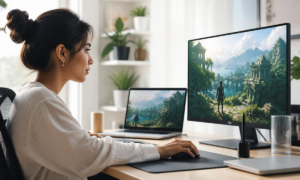
Cloud Gaming Revolution: Accessing Top Titles Without Console Limits
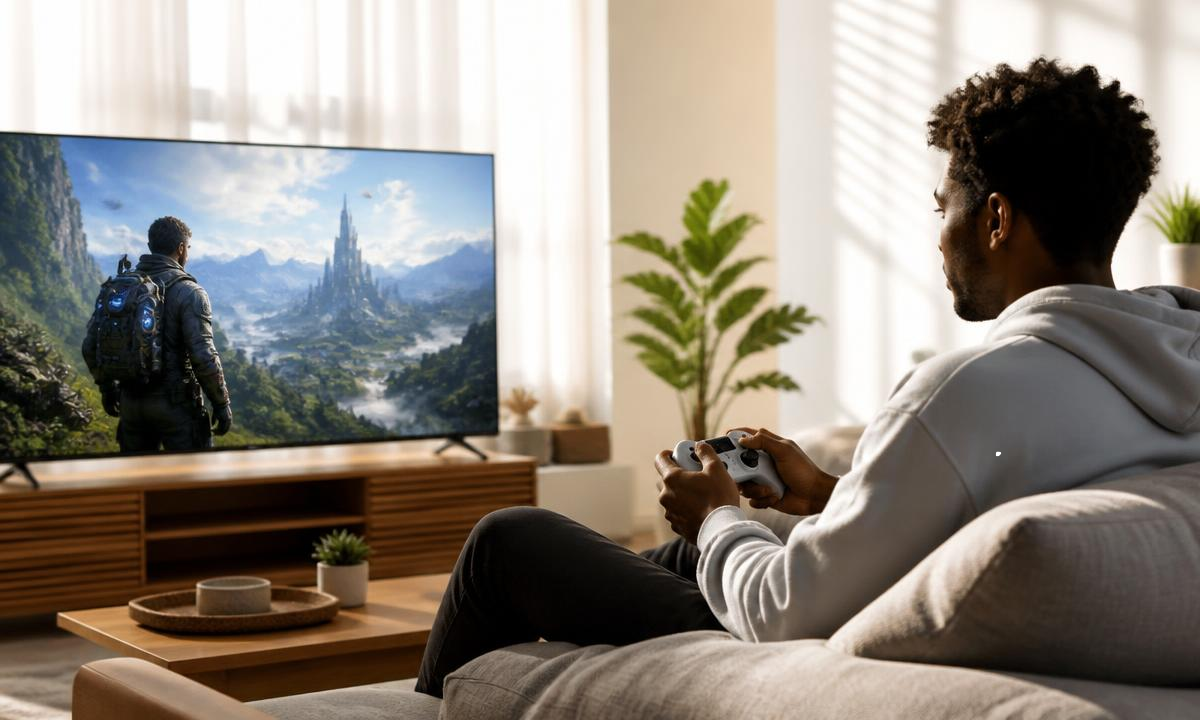
Cloud gaming has evolved from a futuristic concept into a practical method for enjoying modern games on everyday devices. This innovative approach allows players to stream demanding titles over the internet, eliminating the need for a dedicated console or an expensive gaming PC. This shift fundamentally changes where hardware resides and who can access premium gaming experiences. For many in the United States, this offers unprecedented freedom to play.
The Rise of Cloud Gaming: Playing Beyond Console Limits
Cloud gaming is a significant step forward, transforming how many people interact with their favorite digital worlds. It means you can access a vast library of games without the traditional hardware investment. This guide explores how cloud gaming operates, highlights leading platforms, details its primary benefits, and addresses the remaining trade-offs. It also considers who stands to gain the most from this console-free gaming experience.
What is Cloud Gaming and How Does it Function?
At its core, cloud gaming is essentially game streaming. The actual game runs on a powerful remote server located in a data center, not on your local device. The server then streams the video and audio of the game directly to your screen. Meanwhile, your controller, keyboard, or touch inputs are sent back to that remote machine almost instantly.
This process means your phone, tablet, or smart TV doesn’t need to perform advanced graphics rendering itself. All the heavy processing happens elsewhere. Your device primarily displays the streamed content and transmits your commands. This makes it possible to enjoy games that would typically demand expensive, high-end hardware, all from a device you already own.
The technology behind cloud gaming is similar to streaming movies, but it is far more demanding. Movie platforms can buffer a few seconds of content without ruining the experience. Games, however, must react to your input in real time to maintain playability. This is why a stable internet connection for cloud gaming is vital, and latency matters just as much as raw speed.
If you are curious about internet speed requirements for cloud gaming, many services recommend around 10 to 20 Mbps for lower resolutions. For higher-quality gameplay, 35 Mbps or more is often suggested. Crucially, connection stability often improves results more significantly than speed alone, making a stable wired or strong Wi-Fi connection preferable.
The Distinctive Impact of the Cloud Gaming Revolution
Gaming has historically been tied to hardware cycles, requiring new purchases and dealing with storage concerns. Cloud gaming disrupts this pattern by delivering the gaming session as a service. The focus shifts from owning a specific machine to simply accessing an enriching experience. This change creates a more flexible model for households managing their entertainment budgets.
This shift feels familiar to those already comparing various digital services. In fact, many insights for optimizing digital subscriptions also apply to gaming memberships. It helps ensure you get strong value without accumulating unused memberships, allowing for smarter entertainment spending.
Another key reason cloud gaming stands out is its enhanced accessibility. Players who might not justify a large console purchase can still explore popular titles. Families can easily share gaming access across their existing devices. A traveler can effortlessly jump into a game session without carrying bulky equipment. This broader reach aligns with principles of inclusive play explored in modern gaming.
Cloud gaming also significantly reduces common points of friction. Users experience fewer massive game installations and fewer urgent hardware upgrade needs. There is also less local storage stress, as games are not stored on your device. If your main goal is to quickly dive into a game, cloud gaming without extensive downloads can feel remarkably simple and efficient.
Leading Cloud Gaming Platforms to Explore
Not all cloud gaming services operate on the same model. Some services bundle a diverse game library into a monthly plan, offering immediate access. Others allow you to stream titles you already own through existing digital storefronts. Understanding these key differences is essential for identifying the best cloud gaming platform suited to your individual needs and preferences.
Xbox Cloud Gaming: Seamless Integration with Game Pass
Xbox Cloud Gaming is a highly recognized option, largely due to its integration with Game Pass Ultimate. The primary appeal is clear: subscribers gain access to a frequently rotating catalog of games. These titles can be played across a wide array of supported devices, including phones, tablets, web browsers, PCs, and select smart TVs. For players who appreciate variety, it offers an accessible entry into cloud gaming services.
Microsoft’s robust ecosystem provides a major strength for this platform. If you are already a user of Xbox services, the transition to cloud gaming feels very smooth. Game saves, existing subscriptions, and account features often connect seamlessly, enhancing the user experience. You can find official details and a list of supported devices directly on the Xbox Cloud Gaming website.
Its greatest strength lies in sheer convenience. You can quickly sample a game, avoid lengthy installations, and effortlessly switch between different screens with minimal setup. For casual players, busy families, or anyone curious about top cloud games without buying a console, this convenience often outweighs any minor limits in streaming quality.
GeForce NOW: Your PC Game Library in the Cloud
GeForce NOW takes a distinctly different approach compared to many competitors. Instead of primarily offering a built-in content library, it typically allows users to stream PC games they already own through popular digital storefronts such as Steam or Epic Games. For many players, it provides an appealing solution for how to play PC games without needing powerful local hardware.
This service particularly attracts users who have already invested in a digital game library but may not possess strong gaming hardware at home. NVIDIA also places a significant emphasis on various performance tiers and graphical quality. Consequently, GeForce NOW frequently features in discussions about the best cloud gaming service for achieving low ping and a high-fidelity visual experience.
For players who prioritize adjustable settings, superior visuals, and greater flexibility, GeForce NOW can deliver an experience closer to premium PC gaming. It often surpasses what many rival services offer in these areas. Detailed plan information and compatibility updates are readily available on the official NVIDIA GeForce NOW page.
PlayStation Plus Premium: Sony’s Cloud Streaming Offering
PlayStation Plus Premium incorporates cloud streaming capabilities into Sony’s broader subscription service. Its identity is strongly defined by PlayStation’s extensive game catalog, which includes both classic titles and a selection of newer experiences. This makes it particularly appealing to players already connected to Sony’s ecosystem, or those interested in revisiting earlier generations of PlayStation games.
The biggest advantage of this service is its familiarity. If your personal gaming history is closely linked to PlayStation, this service offers a very natural progression into game streaming. It also provides significant value to players who appreciate legacy content as much as, or even more than, brand-new releases. This blend caters to a wide range of PlayStation enthusiasts.
Nevertheless, users should carefully verify supported regions, available streaming features, and any recent changes to the game catalog before subscribing. As with all gaming subscriptions, the ultimate value of PlayStation Plus Premium depends directly on whether its available library genuinely matches the games you wish to play.
Other Notable Services: Amazon Luna and Shadow PC
Amazon Luna employs a unique channel-based approach, which can be quite attractive for users already integrated into Amazon’s extensive ecosystem. It is designed with convenience and broad device compatibility in mind. This makes it an accessible option for households seeking easy access to games rather than deep technical customization.
Shadow PC, on the other hand, operates less like a traditional game library and more as a remote, high-performance Windows machine. It tends to appeal to power users who desire maximum control, extensive mod support, or software flexibility beyond standard cloud gaming services. The primary trade-off is often a higher cost and a need for greater user involvement in setup and management.
These distinct differences are crucial because a cloud gaming services comparison involves more than just image quality. It’s about the access model, the ownership model, device compatibility, the strength of the game library, and ultimately, how closely a service aligns with your personal gaming habits and preferences.
Key Advantages of Embracing Cloud Gaming
The most evident cloud gaming benefits often begin with cost. A modern gaming console or a powerful PC can represent a substantial initial investment. Cloud services transform this large upfront expenditure into a more manageable subscription decision. For many households, this shift makes premium gaming experiences far more accessible and easier to budget for over time.
While cloud gaming might not always be cheaper over many years, it significantly lowers the initial barrier to entry for many. Thinking strategically about digital value and spending, similar to how one might optimize digital subscriptions, can reveal its financial advantages. It allows players to enjoy top titles without the immediate burden of expensive hardware.
Another significant benefit is instant play. The time spent waiting for massive game downloads, software updates, and lengthy installations can seriously cut into available gaming time. This is especially true on devices with limited storage capacity. Cloud gaming largely eliminates these delays, allowing players to move from curiosity to actual gameplay within minutes rather than hours.
Portability is an equally important advantage. A flexible cloud gaming service can transform an ordinary phone, tablet, or even an office laptop into a fully capable gaming screen. While not every device will offer the same level of comfort or image quality, this means that access to your games is no longer confined to a single room or a dedicated machine, offering unprecedented freedom.
There are also practical environmental and household advantages. Fewer local hardware upgrades can lead to fewer old devices needing replacement. It also means less heat generated by gaming hardware in your living space. Furthermore, there’s less worry about constantly clearing local storage to accommodate new games. For many users, this convenience isn’t just a minor perk; it’s the central reason cloud gaming continues to grow in popularity.
Understanding the Current Challenges of Cloud Gaming
The biggest challenge facing cloud gaming is straightforward: its performance is heavily reliant on the quality of your internet connection. If your connection is unstable, frequently congested, or subject to strict data caps, your experience can quickly swing from perfectly smooth to incredibly frustrating. Even the most excellent cloud platforms cannot fully compensate for weak local network conditions.
Gaming latency remains the most frequently discussed drawback. In turn-based games or slower, more narrative-driven adventures, a tiny delay might not be noticeable or significantly impact gameplay. However, in fast-paced competitive shooters, precise fighting games, or demanding platformers, that same delay can feel like the critical difference between maintaining control and suffering a decisive compromise.
This is precisely why cloud gaming for highly competitive players remains a nuanced and often debated topic. While strong infrastructure, strategically located servers, wired connections, and optimized network routing can produce impressive results, native hardware still typically offers the most consistent and responsive experience for elite competitive play.
There is also the important question of game ownership. Many users are comfortable with access-based entertainment models, but cloud gaming often means you are renting availability rather than purchasing permanent ownership of a title. Game catalogs can rotate, licenses may change, and services themselves evolve. If long-term access to specific games is very important to you, this aspect is worth careful consideration.
Finally, while visual quality in cloud streaming is constantly improving, the technology still involves some level of compression. Under perfectly ideal network conditions, the game image can look stunning and sharp. However, under less ideal circumstances, you might notice subtle softness, occasional artifacting, or drops in resolution. For some players, these visual compromises are minor, but for visual enthusiasts, they can be a deal-breaker.
Is Cloud Gaming the Right Choice for You?
If you’re asking, “Is cloud gaming worth it?”, the answer depends more on your personal playing style than on industry hype. For casual gamers, busy families, frequent travelers, students, and anyone seeking gaming access without major hardware expenses, the value proposition can be truly excellent. It provides a gateway to modern gaming that was previously inaccessible to many.
If your primary gaming habits involve story-driven adventures, various sports games, cooperative titles, beloved indie favorites, or occasional multiplayer matches, a well-configured cloud setup might meet your needs surprisingly well. Conversely, if your gaming revolves around elite ranked competition or requires flawless visual control, a local console or dedicated gaming PC may still be the superior primary option.
A practical middle ground involves treating cloud gaming as a valuable complement rather than a complete replacement for other gaming setups. Many players utilize it to easily test new titles or to continue their game progress while away from home. It’s also excellent for accessing a portion of a subscription library before deciding where to invest for the long term.
This hybrid mindset also aligns well with the broader digital ecosystem that currently shapes games, vibrant communities, and virtual economies. For readers interested in how gaming might evolve further, exploring Metaverse Marketplaces can illuminate how access, digital identity, and virtual spaces are becoming increasingly interconnected.
Getting Started with Cloud Gaming: A Practical Guide
Beginning your journey with cloud gaming is often much simpler than many people anticipate. The crucial first step is to select a service that aligns best with your existing habits and gaming preferences. If you desire a bundled game library with immediate access, Xbox Cloud Gaming or PlayStation Plus Premium might feel like natural choices. However, if you already own many PC games, GeForce NOW could make more sense.
Next, it is essential to thoroughly check your internet setup. A stable home connection is often more critical for a smooth experience than merely having a very high advertised speed. If at all possible, opt for a 5 GHz Wi-Fi network or, even better, a wired Ethernet connection for maximum reliability. Additionally, try to reduce network congestion during play, especially if multiple people are simultaneously streaming video or downloading large files.
Afterward, consider your control method. While some cloud games do support basic touch input on mobile devices, a dedicated controller almost always provides a far superior and more immersive experience. Many cloud services seamlessly support standard Bluetooth controllers, and some newer smart TVs now make the pairing process quite straightforward and user-friendly.
Finally, it’s highly recommended to test a service before making a long-term commitment. Many platforms offer free tiers, trial periods, or short-term subscriptions. These options allow you to accurately judge image quality, assess input latency, and evaluate the appeal of the game library firsthand. The “best” cloud gaming platforms are not abstract; they are best when they perfectly match your specific devices, internet connection, and favorite game genres.
The Evolving Future of Gaming Without Physical Consoles
The long-term trajectory for cloud gaming appears robust and promising, even if its adoption continues at an uneven pace across different regions. As 5G networks become more widespread, edge computing capabilities improve significantly, and video compression technologies grow smarter, streaming technology is expected to become even more responsive and reliably accessible for a greater number of households worldwide.
This progress is important because cloud gaming extends far beyond mere convenience. It profoundly reshapes access to games. It opens doors for countless players who were previously priced out of dedicated gaming hardware. It also fluidly supports gaming across diverse devices and varying daily routines. Furthermore, it may heavily influence how developers design new games, user interfaces, and live service systems in the years to come.
Cloud gaming can even strengthen the social dimensions of gaming by making it easier for more people to join shared virtual spaces without requiring matching hardware. The community aspect remains one of gaming’s most enduring strengths. Readers who appreciate this broader perspective might also enjoy insights into gaming accessibility features and how they foster inclusive play.
In essence, the cloud gaming revolution is about more than just streaming technology. It is fundamentally about reducing friction between a player’s interest and their active participation in the gaming world. The fewer barriers that exist between a player and a game, the more flexible and inclusive the entire industry becomes for everyone involved.
Frequently Asked Questions About Cloud Gaming
Can I play games without a console using cloud gaming?
Yes. That is one of cloud gaming’s primary benefits. Many cloud gaming services enable you to stream games on phones, tablets, web browsers, smart TVs, and lower-powered PCs, entirely eliminating the need for a dedicated console.
What is the best cloud gaming platform?
The “best” platform depends on your specific needs. Xbox Cloud Gaming excels for its subscription-based library access. GeForce NOW is outstanding for streaming PC games you already own. PlayStation Plus Premium is attractive for players deeply invested in Sony’s unique ecosystem.
What internet speed do I need for cloud gaming?
Many services can function at lower speeds, but a stable connection of approximately 20 Mbps or more is a practical starting point for high-definition play. Higher resolutions generally require more bandwidth, and critically, low latency is essential for optimal responsiveness.
Is cloud gaming good for competitive games?
It can be, but results can vary significantly. Players with robust internet connections and servers located nearby may achieve a very playable experience. However, native hardware generally remains the safer and more consistent choice for the most latency-sensitive competitive gaming scenarios.
Do I own games on cloud gaming services?
Typically, when using cloud gaming services, you are paying for access to games rather than permanent ownership. Some services allow you to stream games you’ve already purchased through other digital stores, while others rely primarily on a rotating subscription catalog.
Final Thoughts on the Cloud Gaming Landscape
Cloud gaming has definitively earned its position as a serious and viable option for modern players. It effectively lowers hardware barriers, significantly expands access to titles, and offers a flexible way to enjoy top-tier games without structuring your life around a single console. For countless individuals, this fundamental shift is not merely a gimmick; it represents a genuine improvement in how gaming integrates into daily life.
The most effective approach is to remain practical and informed. Compare the various platforms available, thoroughly test your internet connection, and ultimately choose the service that most closely aligns with your specific gaming habits. By doing so, the cloud gaming revolution becomes less about abstract buzzwords and more about something truly useful: playing what you desire, wherever you wish, with noticeably fewer limitations.
About the author

Is a bilingual writer covering gaming, technology, and digital trends. Writing in English and German, he explores video games, new releases, gaming platforms, digital experiences, e-commerce, and emerging technologies, presenting these topics in a clear, accessible, and informative way.